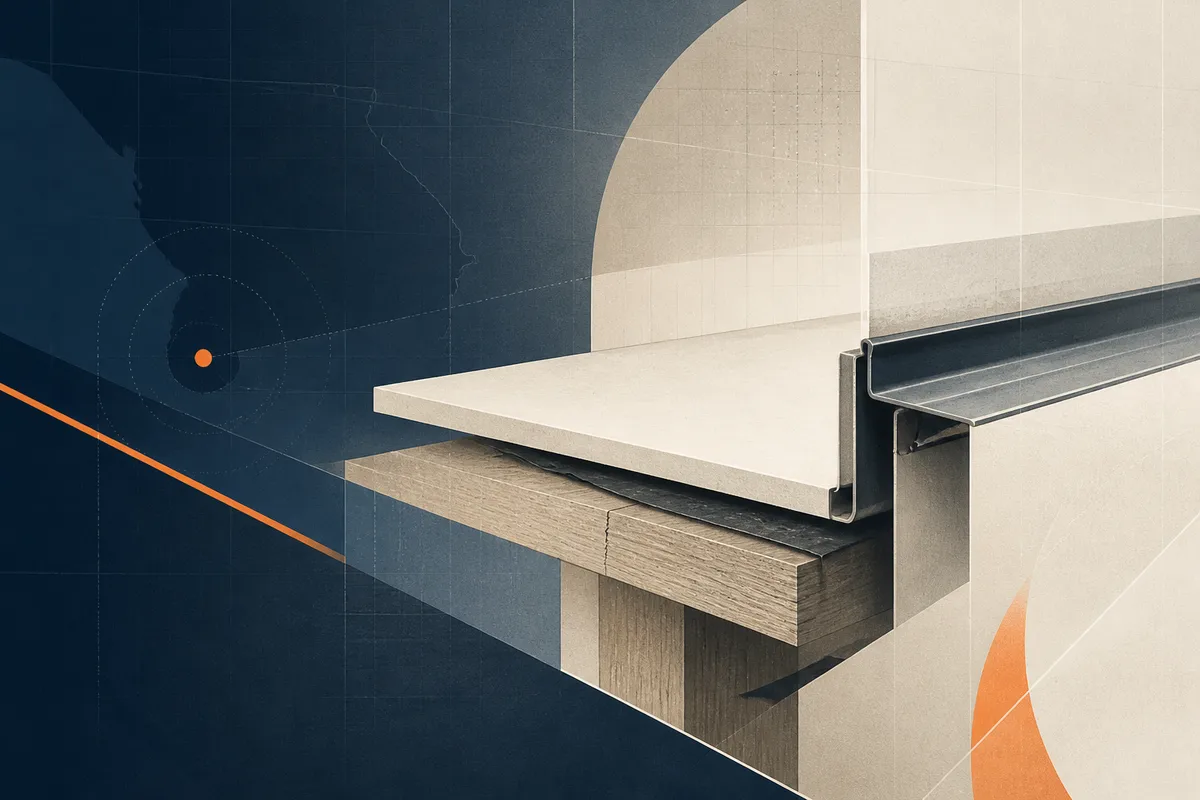
The Hidden Structural Risk of Flashing Failure on Georgia Decks
Deck collapses are seldom sudden events triggered by weight alone; they are the final stage of a slow, invisible process called "death by a thousand drops." In the Atlanta metro area, the combination of heavy seasonal rainfall and high humidity creates a constant moisture load on the house-to-deck connection. If the flashing is improperly installed or has degraded, water seeps behind the siding and sits against the house rim joist, rotting the very wood that the deck bolts are supposed to grip.
This guide details how to identify deck ledger board water damage symptoms before they lead to structural failure. It is intended for homeowners who notice small signs of wear but need to understand the underlying mechanics of how a deck stays attached to a home. By understanding the interaction between flashing, fasteners, and the rim joist, you can make informed decisions about the safety and longevity of your outdoor living space.
Why the Ledger Connection Fails
The ledger board is the primary structural link between the deck and the house. When flashing fails, gravity is no longer the only force at work; hydrostatic pressure and wood rot begin to decouple the deck from the building’s frame.
- Flashing that lacks a "drip edge" allows water to curl back under the metal and run directly down the face of the ledger.
- Fasteners like lag screws or bolts lose their withdrawal strength when the internal rim joist—the board inside your house walls—becomes saturated and soft.
- Debris trapped in the small gap between the deck and the siding acts as a sponge, holding moisture against the wood for weeks after the rain stops.
- Changes in temperature cause metal flashing to expand and contract, which can pull nails loose and create new paths for water entry if not properly integrated with a house wrap.
A Systematic Framework for Diagnosing Ledger Health
Safely evaluating a deck requires looking past the surface aesthetics to the points of mechanical connection.
1Inspect the Drip Edge and Z-Flashing
Examine the metal or plastic strip running along the top of the ledger board where it meets the house siding. The flashing should tuck behind the house siding and overlap the top of the ledger board completely. If you see the flashing is tucked under the ledger or is missing entirely, water is likely flowing directly into the house wall.
2Verify Fastener Integrity
Look at the bolt heads or lag screws securing the deck to the house. If the metal is heavily rusted or if the wood around the bolt head is dark and soft, the fastener is likely no longer providing structural support. According to the Fulton County Prescriptive Deck Details, certain ledger attachments are prohibited, and specific spacing is required to ensure the load is distributed safely.
3Check for House Rim Joist Water Damage
This is the most critical step and often requires looking from the inside out. If you have a crawlspace or unfinished basement, inspect the wood directly behind where the deck is attached. Any signs of staining, fungal growth, or active dampness indicate that the exterior flashing has failed and the house’s primary structure is at risk.
4Search for Lateral Movement
Stand on the deck and attempt to gently sway or bounce. A structurally sound deck should feel like an extension of the house with zero independent movement at the ledger. If you feel a "gap" or a slight shift, it suggests the bolts are pulling out of the rim joist, a clear sign of structural deck repair needs.
The Mechanism of Rim Joist Decay
When flashing fails, the damage is rarely limited to the deck itself. The "rim joist" is the perimeter board of your home's floor framing. Because the deck ledger is bolted through the siding and into this joist, the joist becomes the anchor.
When water gets trapped behind the deck ledger and flashing, it creates a micro-climate where wood-destroying fungi thrive. Since this area is covered by the deck on one side and often by insulation on the other, the wood never dries out. Over time, the wood fibers break down, turning the joist into a material with the consistency of cork. At this point, the bolts are essentially held in place by friction against mud, rather than solid timber.
Professional Evaluation and Repair
A standard structural assessment for a deck in the Atlanta area involves a multi-point inspection of all connection hardware and wood density. A sound scope of work typically includes removing the first few rows of deck boards to gain full access to the flashing and ledger. If the rim joist is found to be rotted, the repair often involves temporarily shoring up the deck, removing the ledger, and replacing the damaged house framing before installing new, code-compliant flashing systems. Homeowners should have their original building permits or previous inspection reports ready to help contractors understand the original construction methods used.
Frequently asked questions
What are the most common deck ledger board water damage symptoms?
Visible signs include dark staining on the ledger, rusted bolt heads, and siding that appears to be bulging away from the house. You may also notice "soft" spots in the wood when pressing a screwdriver against the grain or see water dripping between the house and the deck during a rainstorm.
How often should I check deck flashing for leaks?
It is best practice to inspect the flashing once a year, preferably in late autumn after the leaves have fallen. Clogged gutters or debris sitting on the ledger can trap moisture, so clearing the area while checking for metal corrosion is a proactive way to prevent long-term rot.
Can a deck be repaired if the house rim joist is rotted?
Yes, but the process is more intensive than a simple board replacement. The deck must be structurally supported with temporary bracing so the ledger can be removed, allowing the contractor to cut out and replace the damaged section of the house's rim joist and install new waterproofing.
Does the Atlanta climate affect how fast a ledger board rots?
The local climate features high humidity and frequent rainfall, with the National Weather Service often recording significant chances of precipitation and gusty winds in the region. These conditions prevent trapped moisture from evaporating, which accelerates the growth of rot-inducing fungi compared to more arid climates.
What is the risk of ignoring a small gap between the deck and the house?
A gap usually indicates that the fasteners are pulling out or that the ledger was never properly flashed. Ignoring this allows water to flow directly into your home's floor system, which can lead to interior mold, compromised floor joists, and eventually, a total deck collapse.
Is flashing required for decks in Marietta and Fulton County?
Building codes generally require specific flashing and fastener schedules to ensure safety. For example, the Fulton County Government provides prescriptive details that must be available on-site for inspectors, outlining prohibited attachments and mandatory ledger details to prevent structural failure. Owners in the Marietta service area should ensure any repairs meet these local safety standards.
What happens when you get in touch: you describe the situation, we ask the few questions that actually change the answer, and you get a clear scope and next step — no obligation.