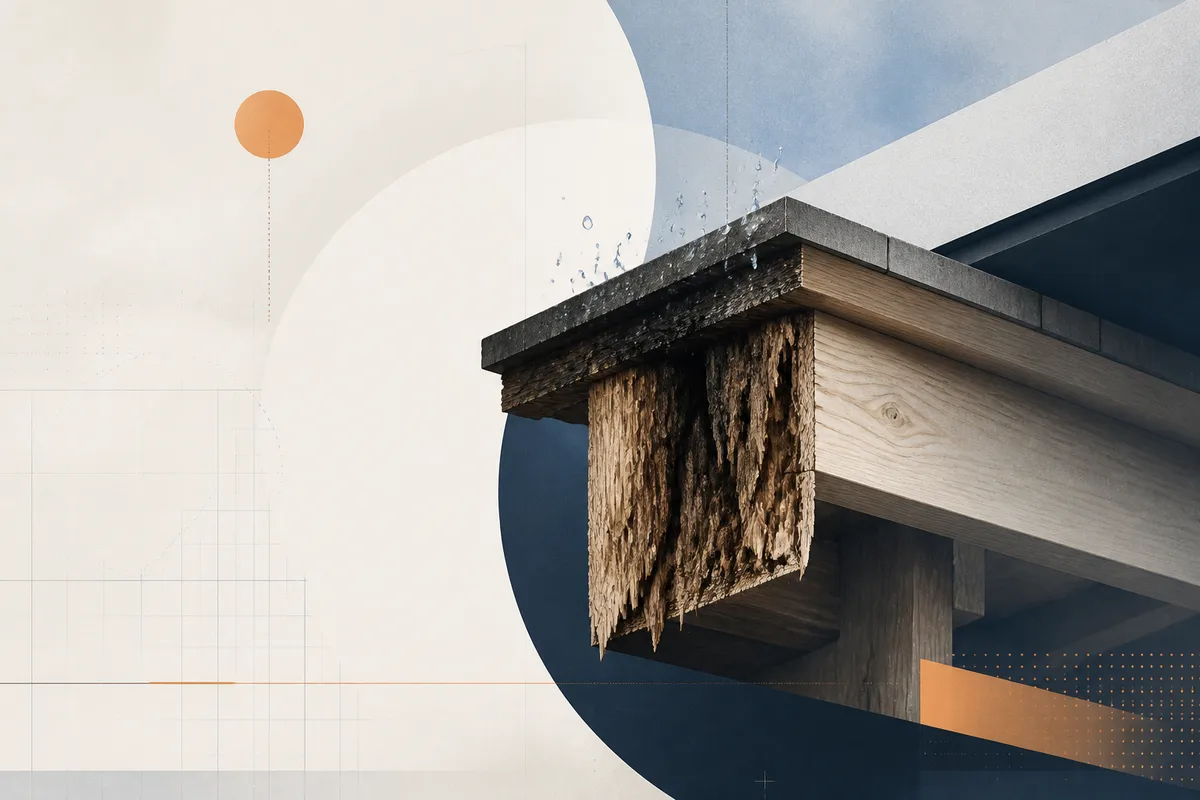
The Mechanics of Vertical Decay: Why Deck Joists Rot from the Top Down
Homeowners often assume that if their deck boards look clean and stained, the structure beneath is secure. In the humid climate of Atlanta, where the National Weather Service frequently records humidity levels above 60%, the reality is often the opposite. The gap between the deck board and the joist creates a physical moisture trap that remains damp for days after a rainstorm, providing the ideal laboratory for structural wood decay.
This article breaks down the biological process of top-down rot and the physical indicators that the skeleton of a deck is failing. It is written for property owners who need to understand the technical risks of aging wood frames and the specific preventative measures required to extend a deck’s lifespan.
Why Horizontal Surfaces Are the Vulnerability Point
Standard pressure-treated lumber is resistant to rot, but it is not immune, especially when water is forced into the wood grain by gravity and capillary action. The top edge of a joist is the most vulnerable point for several reasons:
- Fastener penetration creates direct conduits for water to enter the untreated center of the wood.
- The flat surface of the joist prevents water runoff, leading to "pooling" beneath the deck boards.
- Debris like pine needles and pollen collect in the gaps, holding moisture against the wood like a wet sponge.
- Lack of airflow in the tight space between boards prevents the wood from ever reaching a fully dry state.
The Framework for Evaluating Joist Integrity
Maintaining a safe deck requires moving beyond surface-level aesthetics to evaluate the actual load-bearing components.
1Identify deck joist rot symptoms
Visible indicators often start with "mushrooming" or softening of the wood around screw heads. If a screwdriver can be easily pushed into the top of the joist, the internal fibers have likely lost their structural capacity. Dark staining or fungal growth along the top two inches of the joist side is a sign that the rot is progressing downward.
2Assess the ledger and flashing
The connection between the deck and the house is the most common point of catastrophic failure. Inspecting the deck ledger and flashing ensures that water is not being diverted behind the siding, which can rot both the deck frame and the house rim joist simultaneously. In some jurisdictions, such as the City of South Fulton, certain repairs and replacements require specific permits and inspections to ensure safety.
3Verify hanger and fastener condition
When the top of a joist rots, the grip on the nails or screws inside joist hangers is compromised. Check for rusted hardware or fasteners that appear to be pulling away from the wood. According to Fulton County Government prescriptive details, mechanical fasteners and specific hanger requirements must be met to maintain structural load paths.
4Implement joist tape benefits
During a board replacement or a new build, applying a butyl or bitumen-based tape to the top of the joists creates a waterproof barrier. This prevents water from sitting on the wood and seals around fastener penetrations. This simple intervention can significantly extend the pressure treated wood lifespan by eliminating the primary moisture trap.
The Science of Fungal Colonization
Wood-decay fungi require four elements to survive: oxygen, favorable temperatures, food (wood fibers), and moisture. In the shade of an Atlanta backyard, temperatures remain within the growth range for most of the year. When moisture content in the wood exceeds 20%, fungi begin to secrete enzymes that break down cellulose and lignin. Because the top of the joist stays wet longer than the sides or bottom, the decay starts at the top and moves vertically, effectively hollowing out the beam while the sides remain deceptively firm.
How Deck Repairs Atlanta Helps
Managing structural repairs requires a systematic approach to identifying which components can be salvaged and which require immediate replacement. A standard deck repair scope usually involves a thorough cleaning of debris from joist tops, a moisture probe of all horizontal members, and an audit of the ledger attachment. For residents in the Marietta service area, these inspections are the first step in determining if a deck can be reinforced or if a full frame replacement is necessary. Homeowners should have information ready regarding the age of the deck and any visible sagging or "bouncing" felt while walking across the surface.
Frequently asked questions
How do I know if my deck joists are rotting if the boards look fine?
You must inspect the deck from underneath with a bright light. Look for dark, water-stained streaks running down the sides of the joists or white, fuzzy fungal growth. Use a flathead screwdriver to poke the top edge of the joist; if the wood is soft or crumbles, the structural integrity is compromised regardless of how the top boards look.
Can I just sister a new joist to a rotting one?
Sistering—attaching a new joist alongside an old one—is only a temporary fix if the original rot is not addressed. If the moisture source remains, the decay will eventually spread to the new wood. Structural repairs must ensure the new member is properly supported by the beam and ledger as per local building codes.
Why does pressure-treated wood still rot?
Pressure treatment involves forcing chemical preservatives into the wood, but these chemicals often do not penetrate to the very center of thick beams or joists. When you cut a joist to length or drive a screw into it, you expose the untreated inner heartwood. If water sits in those openings, the wood will decay from the inside out.
Does Atlanta’s weather specifically affect joist longevity?
Yes, the high humidity and frequent heavy rain cycles in North Georgia mean that wood rarely has the opportunity to dry out completely, especially in shaded areas. The lack of UV exposure under deck boards prevents the sun from naturally drying the joist tops, creating a persistent damp environment that accelerates fungal growth.
When is it time to stop repairing and start replacing?
If more than 20-30% of the joists show significant top-down decay, or if the ledger board connection to the house is failing, a full replacement is usually safer and more cost-effective. A structural audit can determine if the primary posts and beams are still sound enough to support a new frame. For a professional assessment, property owners can call (770) 202-3436 to discuss their specific deck conditions.
What happens when you get in touch: you describe the situation, we ask the few questions that actually change the answer, and you get a clear scope and next step — no obligation.